Montessori
Vidyarambham: What Comes Before the First Letter
Most of us in Kerala know the picture. On Vijayadasami, a small hand is guided through the first letter, written in a plate of rice. This year that day was 21 October. Vidyarambham is a cherished beginning. A child sits close to someone they love and makes a mark.
That mark is beautiful. It is a beginning. The hand that will write with ease, and the ear that will read, have usually been practising for months, through play and ordinary work. There is no rush to sit a two- or three-year-old down with a pencil.
If your child took part this year, wonderful. If the day passed them by, nothing is missed.
Why the hand comes first
A pencil is thin. To hold it comfortably, a child uses a pincer grip: the thumb and the index finger meeting, the other fingers curled in to support them. That grip grows when the hand picks up little things, pinches, twists, and lets go.
A young child often holds a crayon in a whole fist. That is a normal stage. Strength in the palm and fingers comes first. The precise pinch comes through real jobs, long before anyone corrects a grip.
Pouring, pinching, and buttoning are the practice. Writing makes sense once those small muscles can work without strain. A hand that has been given this kind of work is much more likely to enjoy a pencil later.
What prepares the hand
In a Montessori classroom, much of the early work is hand work, even when nobody has mentioned writing.
Knobbed cylinders. Wooden cylinders sit in a block, each with a small knob. The child lifts one by the knob and puts it back in its hole. That knob is for a pincer grip, the same thumb and index finger a pencil will want later.
Transferring, pouring, and threading. Beans move from bowl to bowl with tongs or a spoon. Rice or water is poured from a small jug. A lace goes through a bead. The fingers aim, squeeze, and release.
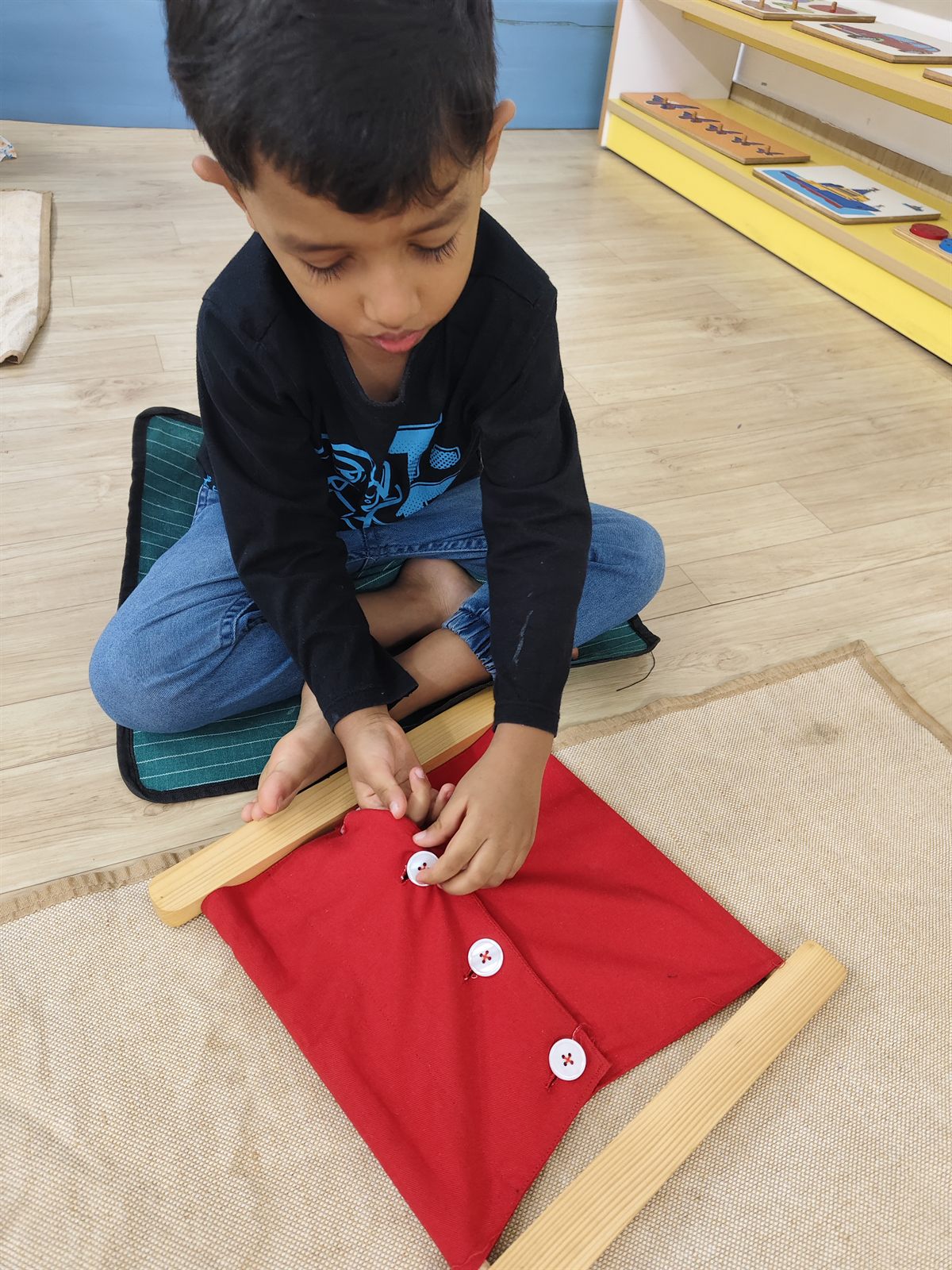
Dressing frames and knobbed puzzles. A button frame is a cloth panel with real buttons, on a stand, so a child can practise without fighting the shirt they are wearing. Puzzle pieces and pegs with knobs ask for the same pinch.
Sandpaper letters. The child traces a sandpaper shape with two fingers, index and middle, and says the sound as they go. Mmm, the sound, rather than the letter’s name. Touch, shape, and sound meet here, often before a pencil is offered.
Metal insets. Later, a metal shape guides the pencil. The child traces around it and fills it with lines. This is pencil control, practised before anyone asks for a word.
Children repeat what they enjoy. That repetition strengthens the hand.
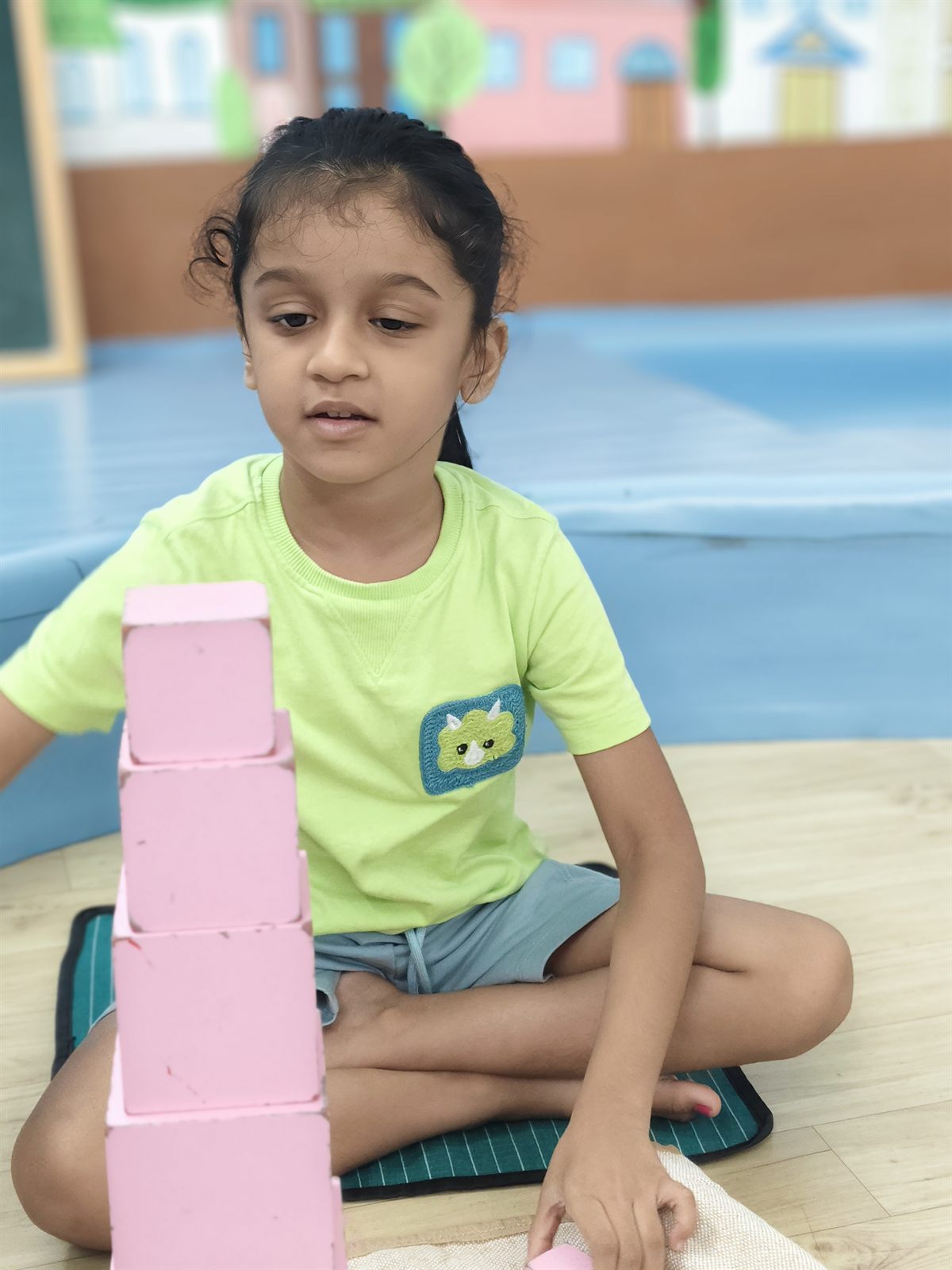
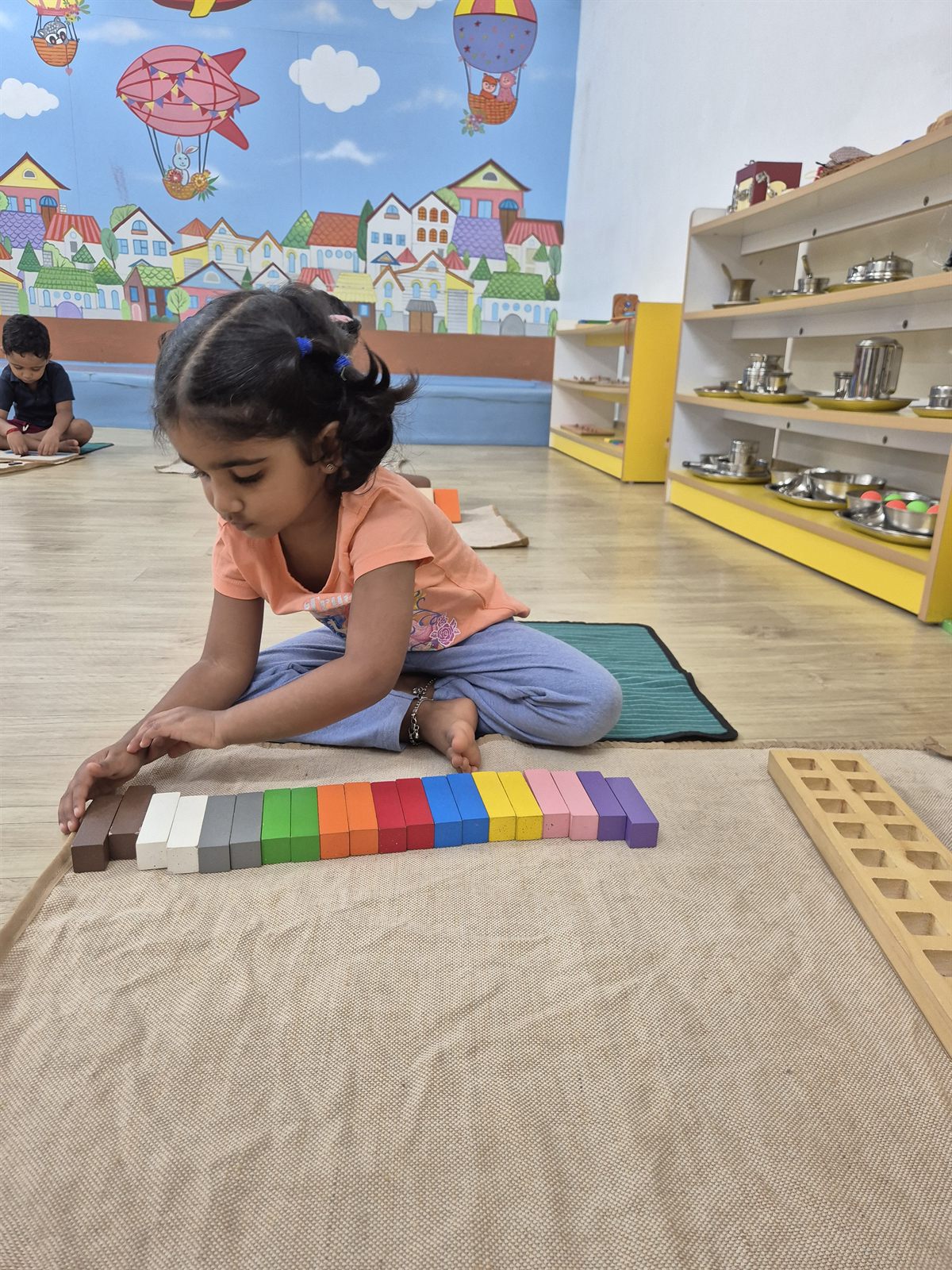
Stacking the pink tower, or setting coloured tablets in a row, asks for the same steady hand and the same willingness to stay with one job.
Reading starts in the ear
Reading can be well underway before a pencil feels natural. It starts with sound.
“I spy something that starts with mmm.” Mmm as in Amma, mango, mat. You listen for the first sound together. Letter names can come later. The sound is what a child needs when they meet the shape.
A book at bedtime, a song in the car through Kaloor, talk about the market. A child who hears plenty of language has more to attach a letter to. In Montessori, children often learn the sound and the shape of a letter through touch, on the sandpaper letter, before they write it. Tracing in the air counts. A sentence on paper can wait.
What you can do at home
A Kochi home already has this work. Nothing has to be bought.
Tear newspaper. With you sitting close, let your child pick rice grains or beans into a bowl. Mouths will try, so stay there, and keep it short. Squeeze a sponge, a ball, or dough. Peel a banana. Button a shirt, or an old one laid flat. Sort leaves, bottle caps, or spoons.
Read aloud. Name sounds as you cook. “Ppp, plantain. Ppp, pot.” Sing the songs you already know. A few minutes on the kitchen floor is a full session.
A gentle note
If your child sat for Vidyarambham, hold it warmly. The rice, the letter, the person guiding the hand. It is a blessing for your family.
If they did not, nothing is missed. Some were napping. Some families were away. Some are one and a half, and the rice is still a snack. The day is a welcome into learning. Every child arrives at writing in their own time.
The short version
The first letter in rice is a beautiful beginning. The preparation around it is quieter: a pincer grip from pinching and buttoning, sounds in games and stories, letters met first by the fingers.
If you would like to see the knobs, the buttons, and the sandpaper letters, you are welcome to visit us in Kaloor and watch a morning for yourself.