
Parenting
Settling In at Preschool: What to Expect in the First Few Weeks

Most parents brace for one hard morning. The truth is closer to this: settling in is a few weeks of small ups and downs, not a single dramatic goodbye. Some children walk in on day one and never look back. Others are cheerful for three days, then cry in week two when the newness wears off and they realise this is the routine now. Both are completely normal.
If your child is about to start at a preschool in Kaloor or anywhere in Kochi, here is an honest picture of what the early weeks tend to look like, so nothing catches you off guard.
What “settling in” actually means
Settling in is your child learning three things at once: that this new place is safe, that the adults here will help them, and that you always come back. None of that is taught in a lesson. It builds through repetition, through a predictable routine, and through small wins like finding their own cubby or finishing a puzzle on their own.
Because it is emotional work, it does not move in a straight line. A good week can be followed by a wobbly Monday. That is the process working, not failing.
A rough timeline (every child is different)
The first few days. Expect tears at drop-off, and expect them to stop faster than you think. In a Montessori environment, teachers do not try to force a child to stop crying. They stay calm and nearby, and let the materials do some of the work. Curiosity usually wins within the first ten or fifteen minutes.
The first week. Your child starts to recognise the shape of the day: circle time, then free choice, then snack. Knowing what comes next is one of the biggest sources of comfort at this age. Drop-offs may still be shaky, but there is a rhythm forming underneath.
Weeks two and three. This is often when a delayed reaction shows up. A child who was fine at first may suddenly protest. It usually means they have understood that school is permanent, not a one-time outing. Consistency from you matters most here. Keep sending them, keep goodbyes short.
By week four to six. For most children, drop-off becomes ordinary. They have a friend or two, a favourite activity, and a teacher they trust. The “bye, Amma” comes easily, and sometimes they are too busy to look up.
What is normal, and what is worth a conversation
Crying at drop-off, clinginess in the morning, being extra tired or hungry after school, and the occasional backward step after a weekend or a holiday are all typical. Children often hold it together all day and let their feelings out at home, which is a sign they feel safe with you, not a sign school is going badly.
It is worth a calm chat with the teacher if, after several weeks, your child is still distressed for most of the day rather than just at drop-off, stops eating or sleeping in a way that does not settle, or shows a sharp change that lasts. A good school will already be watching for this and will tell you what they see during the day, when you are not there.
How we approach settling in at Little Graduates
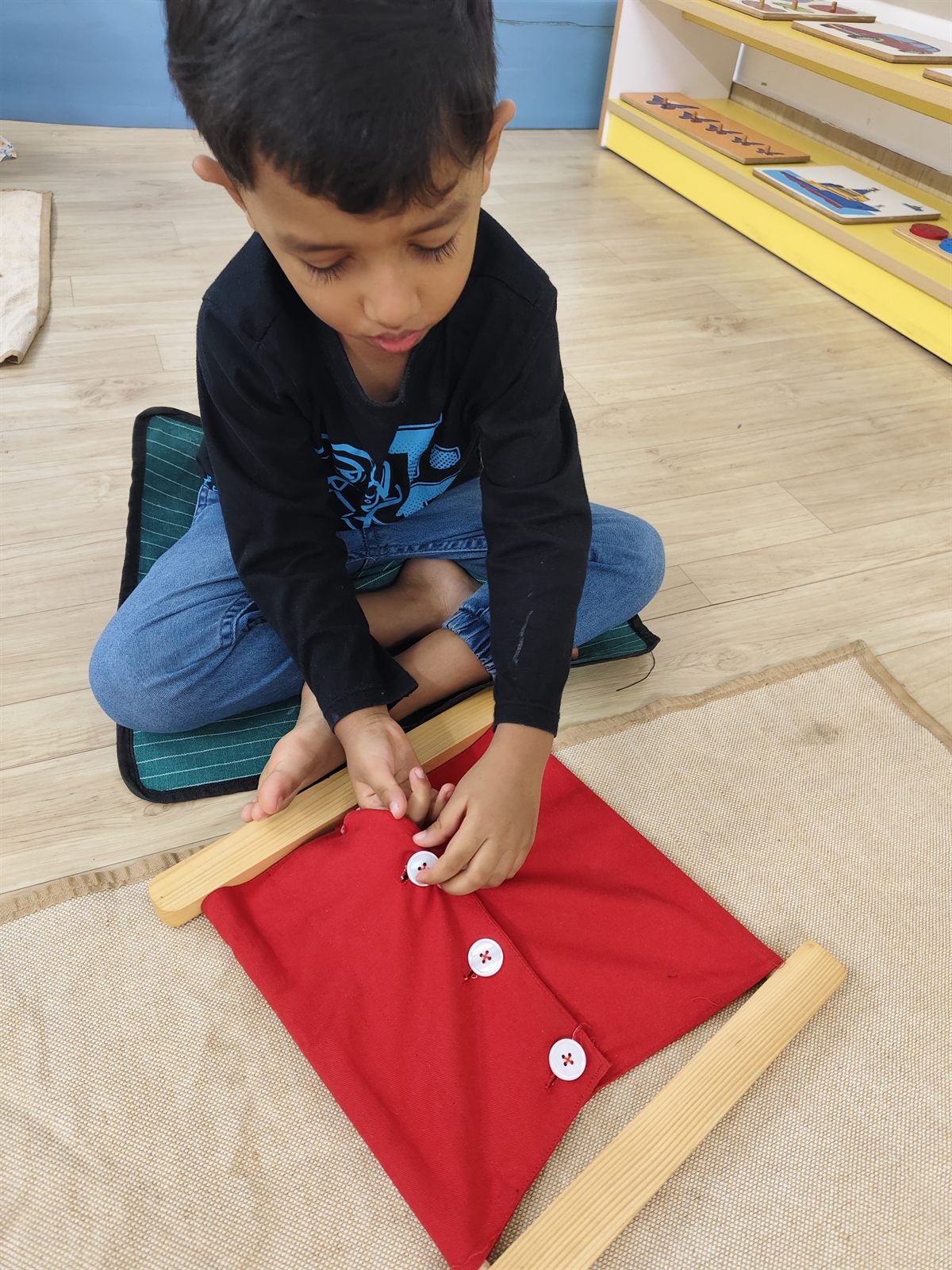
At our Montessori preschool and playschool in Kaloor, we plan for the settling period rather than rushing it. New children ease in gradually, teachers stay close during the first weeks without crowding, and the same familiar faces greet them each morning. The prepared environment helps too: low shelves, real materials, and work a child can choose and finish gives them a sense of control on a day when a lot feels out of their hands.
We also keep you in the loop. Knowing how the morning went after you left tends to settle the parent as much as the child.
What you can do at home
Keep goodbyes short and confident. A long, tearful farewell tells a child there is something to be worried about. A quick hug and a clear “see you after snack time” tells them you trust the place.
Name their feelings instead of dismissing them. “I know you miss home, and you are going to build with the blocks today” lands better than “don’t be sad.” Keep mornings unhurried, keep bedtimes steady, and expect them to be tired for the first couple of weeks while their brains work overtime on all this newness.
The short version
Settling in takes most children a few weeks, moves in fits and starts, and almost always ends well. Your calm is the biggest thing you bring to it.
If you are looking at preschools in Kaloor and want to see how the settling-in period works in practice, you are welcome to visit and watch a morning for yourself.