

Discover how cooking activities at Little Graduates promote healthy eating habits, fine motor skills, and joyful parent-child bonding. Here’s why home-cooked food matters for toddlers.
At Little Graduates, June wasn’t just about birthdays — it was about stirring, kneading, and celebrating healthy food habits.
To honour our June babies, we turned the spotlight to something close to every family’s heart — food. Our special Cooking Week introduced toddlers to the joy of making simple, nutritious dishes with their own hands. From fruit kebabs and mini sandwiches to healthy muffins and banana smoothies, the focus was on fresh ingredients, sensory fun, and independence.
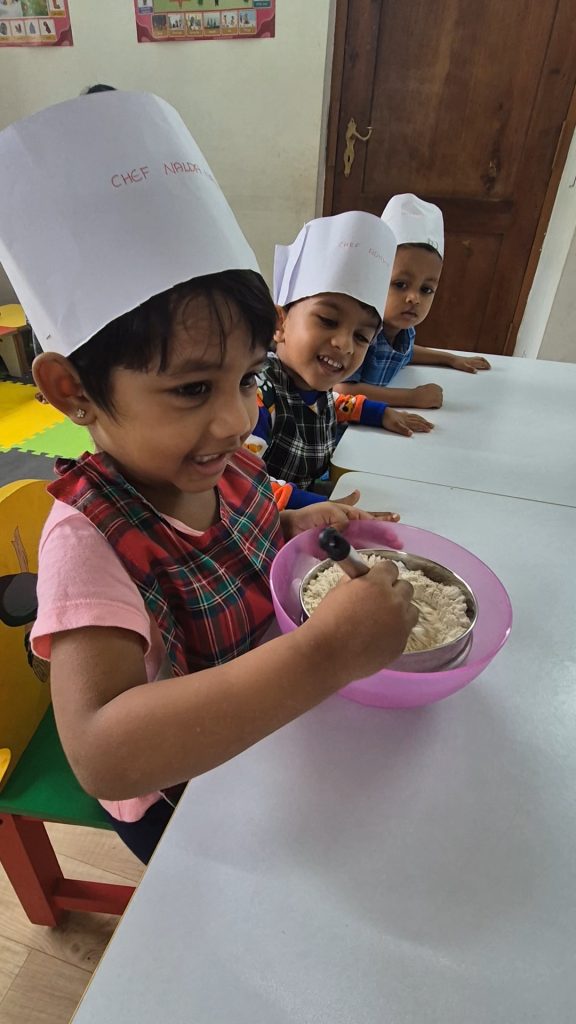
Why Cooking Activities Matter in Early Childhood
Cooking isn’t just about food. It’s about life skills.
- Fine Motor Development: Peeling a banana or spreading butter builds hand strength and coordination.
- Math & Science Concepts: Measuring ingredients, observing changes — these are the roots of STEM learning.
- Language Growth: Talking through recipes builds vocabulary in a meaningful, real-world context.
- Confidence Boost: Children feel proud when they make something — even more so when others eat it!
Building Healthy Eating Habits at Home
Children are more likely to try what they’ve helped create. When toddlers are involved in cooking, mealtime battles reduce, and healthy eating becomes normal — not forced.
Here are a few tips to try at home:
- Let your child wash vegetables, mash soft fruits, or help stir.
- Give them real (but safe) kitchen tools sized for their hands.
- Keep processed snacks out of sight; offer natural, colourful options.
- Eat together. It’s not just about nutrition — it’s about connection.
Home-Cooked Food > Packaged Food — Here’s Why
In today’s fast-paced world, it’s easy to lean on store-bought options. But studies show that home-cooked meals:
- Lead to better nutrition and portion control.
- Lower the risk of childhood obesity and lifestyle diseases.
- Build emotional security when eaten together as a family.
At Little Graduates, we’ve seen it firsthand — children who bring homemade snacks tend to have more consistent energy, better focus, and fewer sugar crashes.
A Montessori Take on Food
In the Montessori approach, food preparation is part of practical life. It’s not a side activity — it’s central to learning. Children are treated with trust and given real responsibilities. We don’t rush them. We show them.
And when a child learns to make their own snack or pour their own drink — that’s freedom, that’s discipline, and that’s education.
Join the Movement: Cook. Eat. Grow.
We invite all parents to continue the spirit of Cooking Week at home. Keep it simple. Make it joyful. Involve your child. You’re not just feeding their body — you’re nourishing their independence.
Because at Little Graduates, we believe it all starts here — with a spoon, a smile, and a little chef in the making.
 Previous Post
Leave Your Comment