

From the classrooms of Little Graduates, Kaloor, Kochi
Most parents ask us the same thing:
“When will my child start learning numbers?”
“Can Montessori really teach math without books or worksheets?”
Our answer: Montessori doesn’t just teach counting—it teaches how to understand numbers deeply. And it starts much earlier than you think.
🎯 The Montessori Way: Learning Through Hands and Heart
Montessori classrooms are filled with beautiful, hands-on materials—many made of wood, felt, beads, or sandpaper. But they aren’t just toys.
They are carefully crafted tools designed to help children feel quantity, see patterns, and build math from the ground up.
🔢 What Counting Looks Like in Montessori
Here’s how children move through the magic of numbers:
1. Sensorial Foundation
Before numbers even appear, we build math sense by working with:
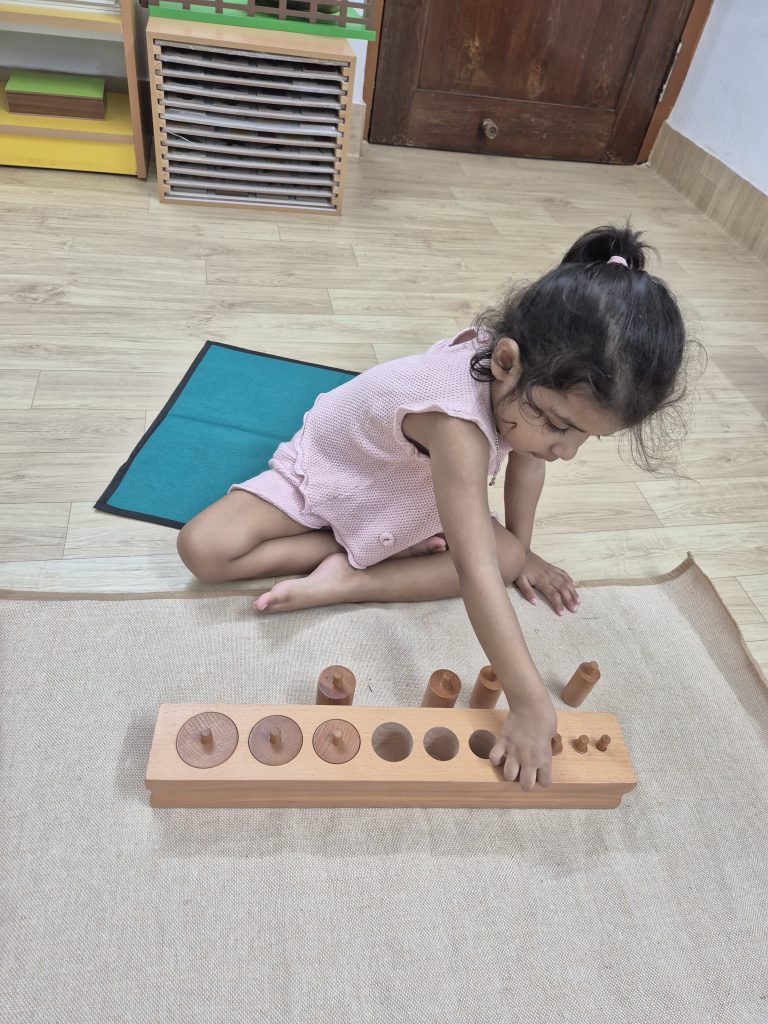
- Knobbed cylinders (size grading)
- Red rods (length differentiation)
- Spindle boxes (grouping and zero concept)
It’s subtle, but this is where children learn: big vs. small, long vs. short, one vs. many.
2. Number Symbols and Quantity
Once the brain is ready:
- We introduce number rods to teach quantity (1–10).
- Then come sandpaper numerals—children trace the shape of numbers with their fingers, building memory through touch.
- Then they match numerals to rods, linking abstract symbols with real-world quantities.
This is where true number sense starts—not just reciting “one-two-three” but understanding what “3” actually means.
3. Counting is Action-Based
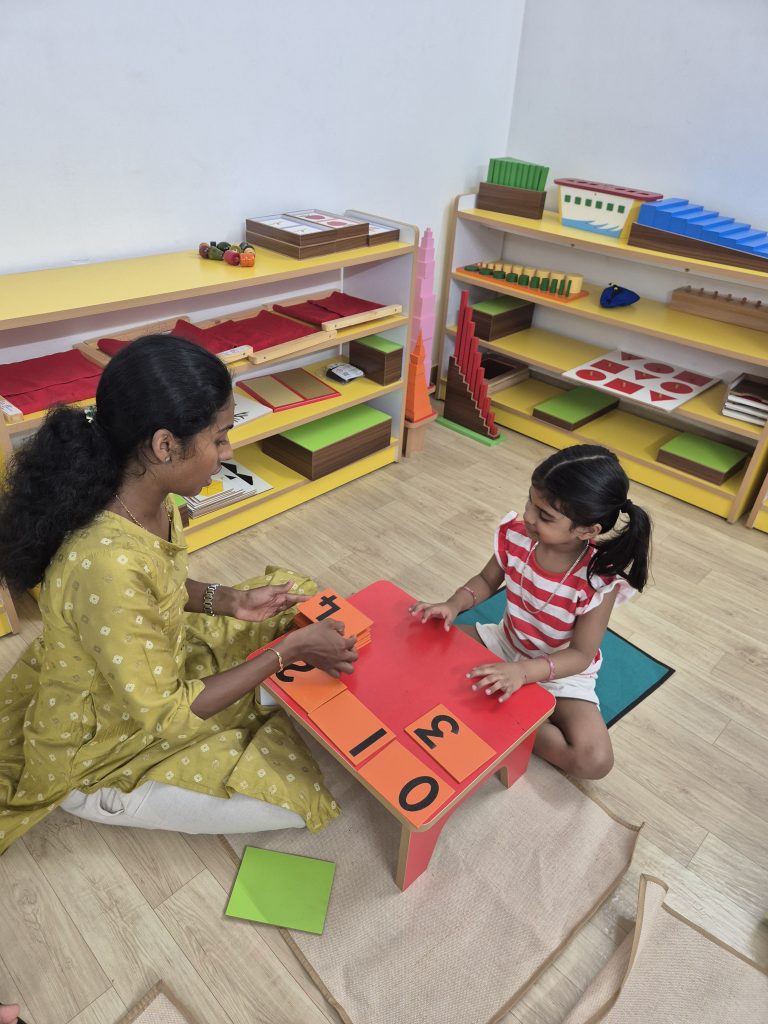
Children move beads, group counters, hold rods. They don’t just “count”—they build, check, and correct themselves using control of error.
That independence builds confidence.
🌱 Real Math, Real Understanding
Montessori math goes beyond rote memorization:
- Children understand odd and even with the cards and counters.
- They grasp place value using the golden bead material (units, tens, hundreds, thousands).
- They discover patterns, build operations, and even explore basic addition and subtraction through storytelling and physical activities.
All before they’re six.
👨👩👧 Why This Matters for Parents
We’ve seen children who enter with zero interest in numbers walk out loving math.
Because it’s not scary. It’s not a test.
It’s a discovery.
If your child says “I counted 10 beads!” with excitement—that’s real joy in learning. And that’s what we aim for every day at Little Graduates.
 Previous Post
Leave Your Comment